A Climate of Hope
Overview
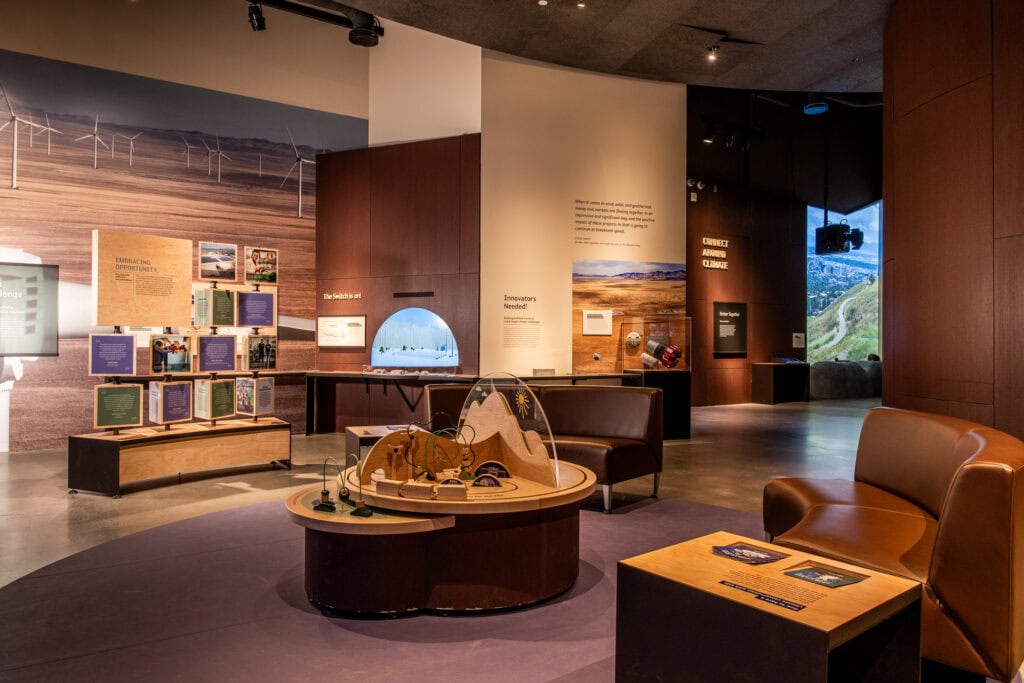
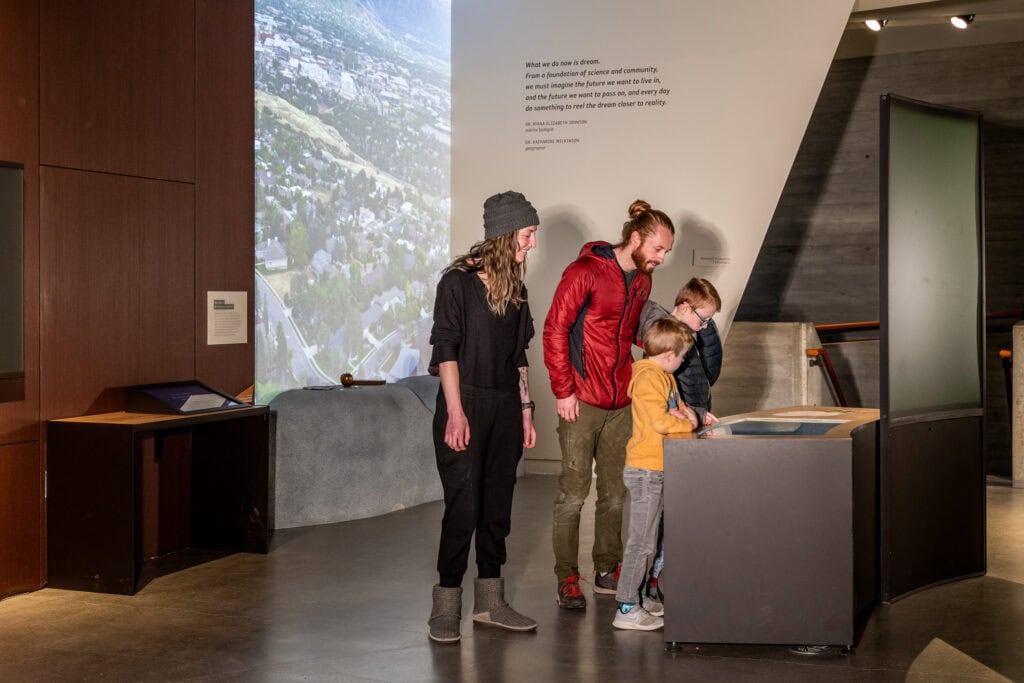
Trivium collaborated with the Natural History Museum of Utah (NHMU) to create five interactives for a new permanent exhibition on climate change, inspiring and empowering visitors to take meaningful climate action in their communities.
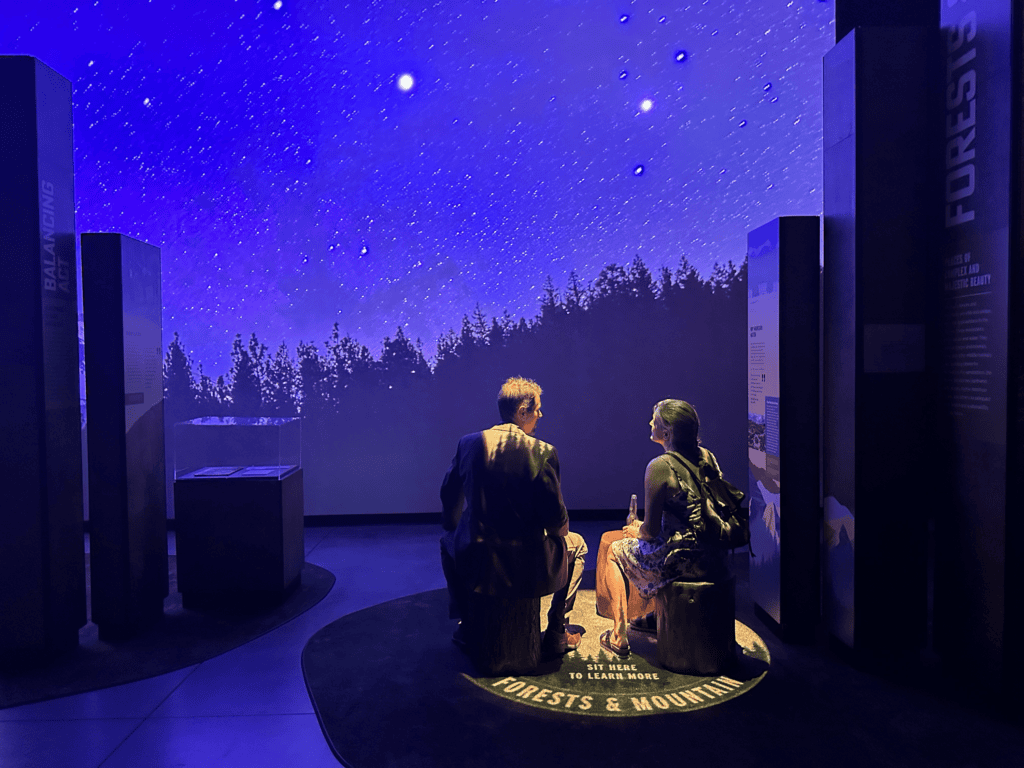
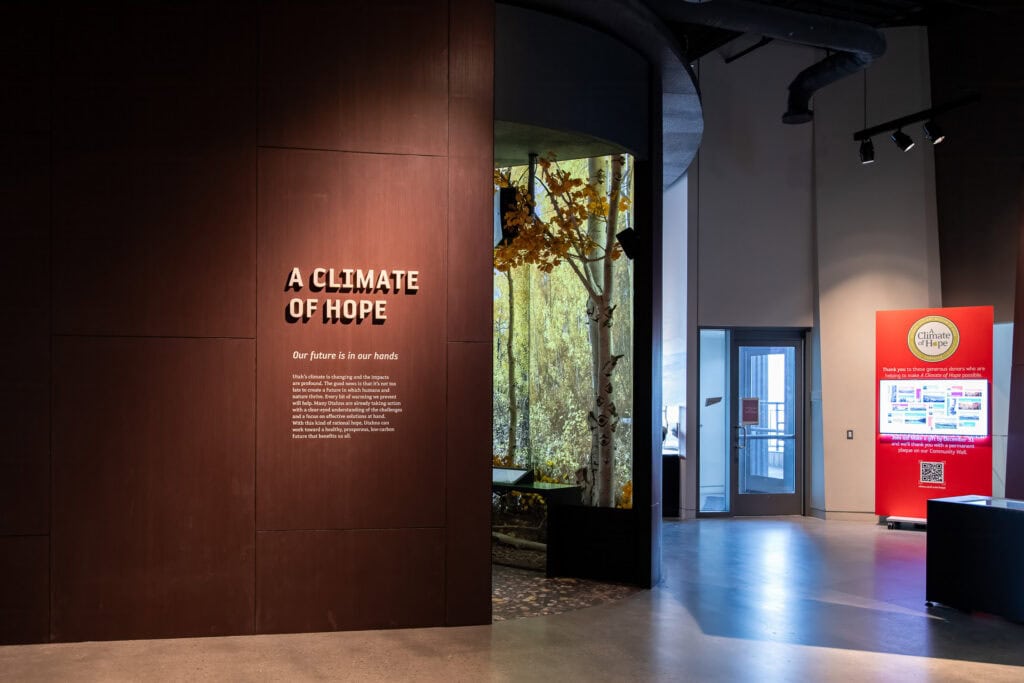
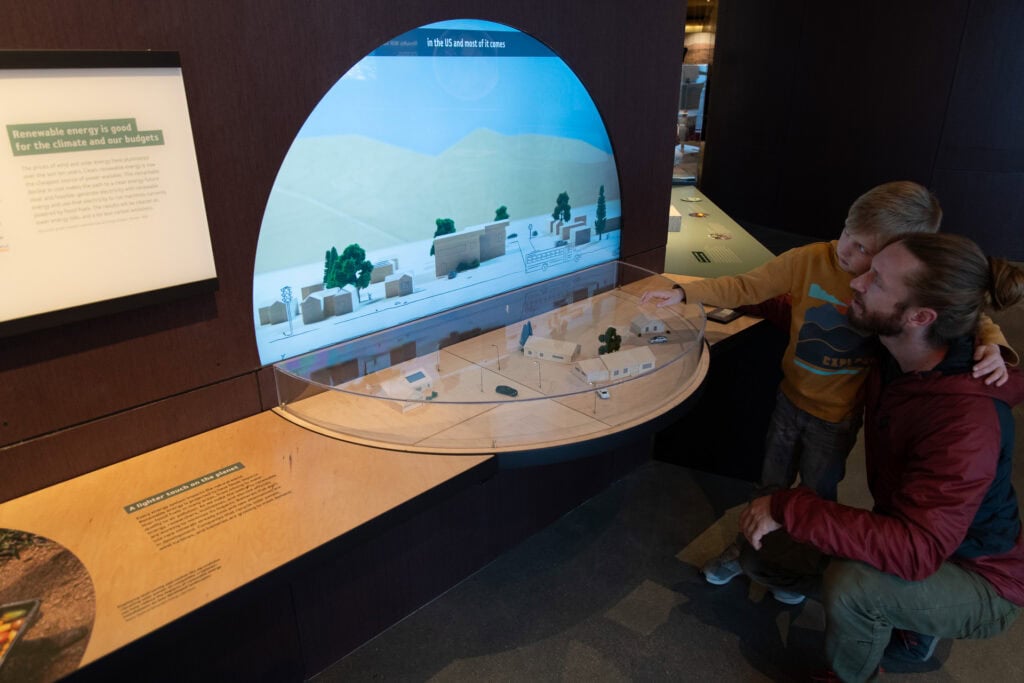
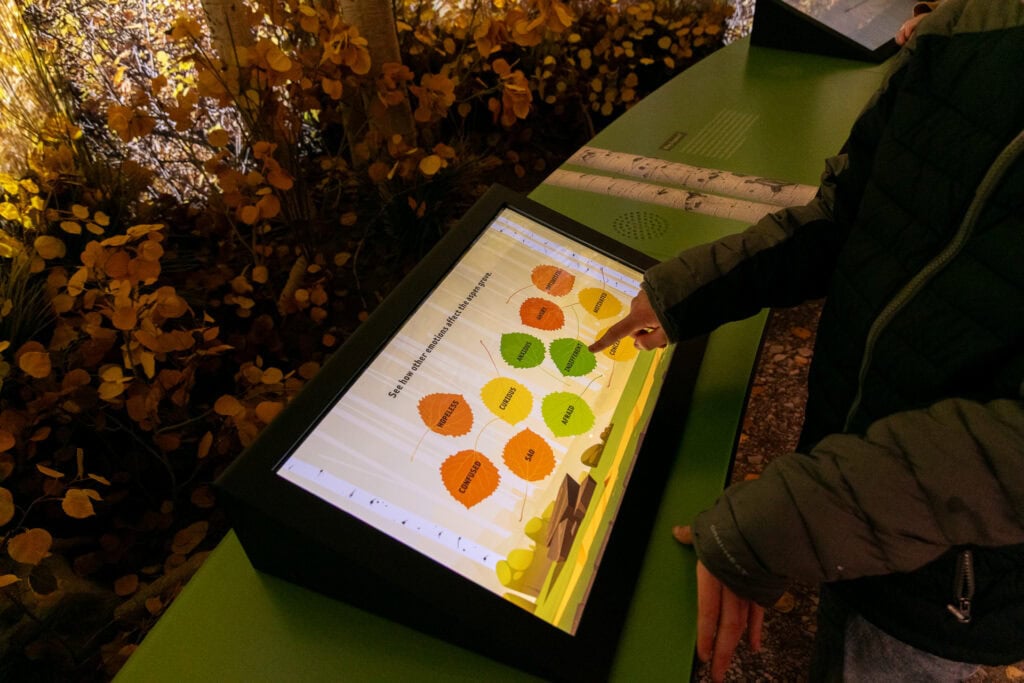
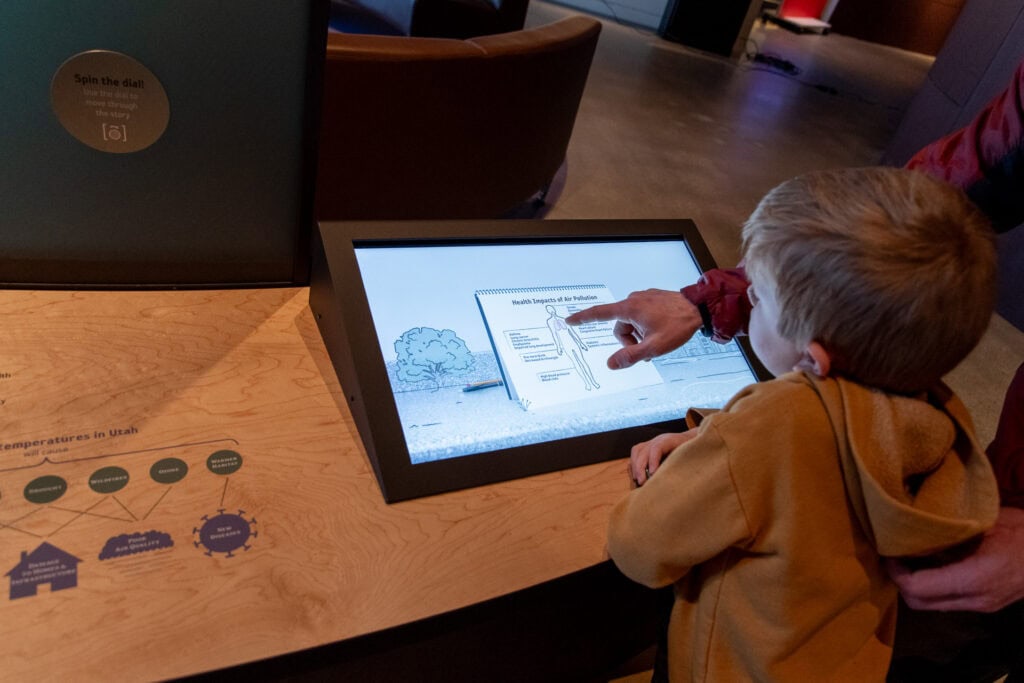
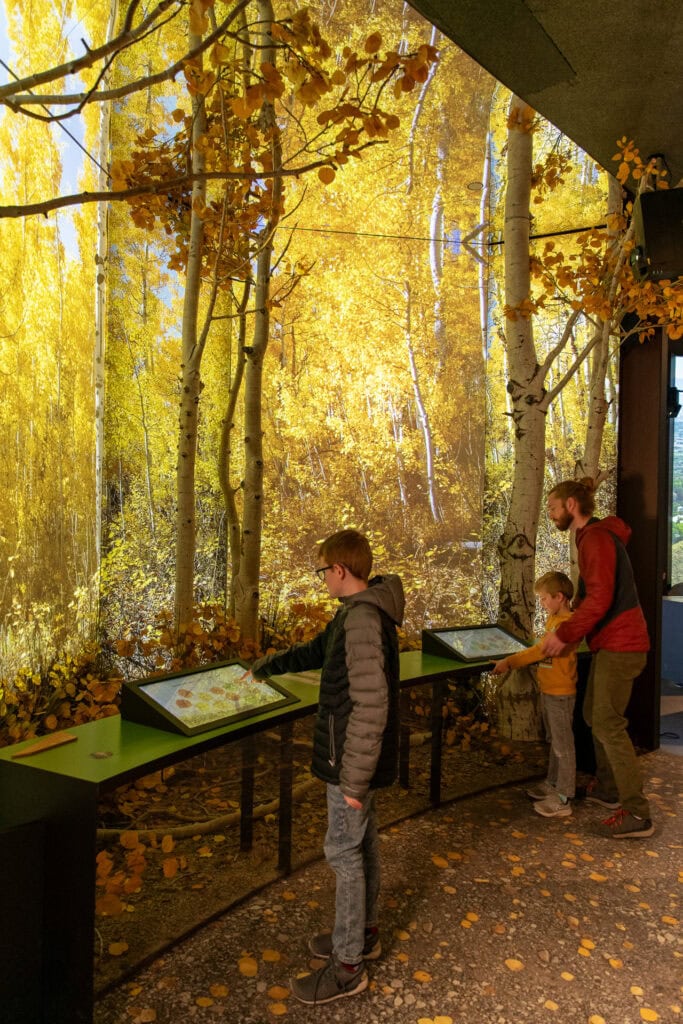
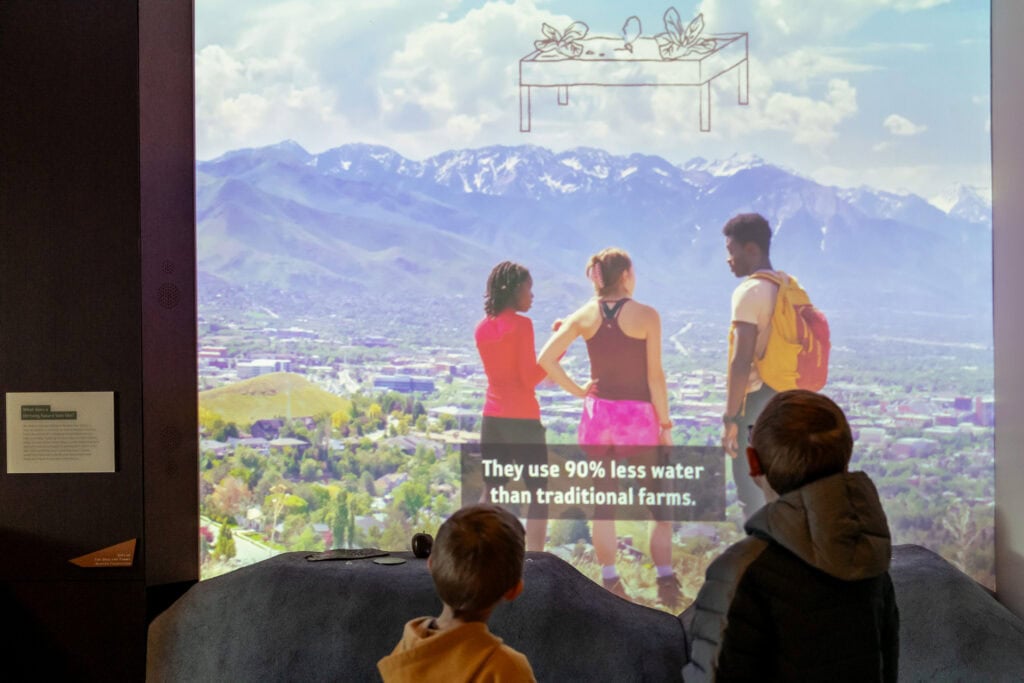
At the heart of the exhibition is an immersive experience where visitors enter an enclosed space that feels like stepping into a virtual Aspen tree forest. Using projected video filmed in a local Aspen forest, the visitor is surrounded by trees and an environmental soundscape. Touchscreens allow visitors to select keywords representing their personal feelings about climate change. When a word is selected, the forest transforms into a visual expression and changing the “mood” of the space. Additional interactives invite visitors to explore actions they can take at the individual and community levels, learn about how electricity can be generated with renewable energy, discover the health impacts of air quality to Utahns, and envision a better future in the face of climate change.
This project is a Gold Winner of the 2025 MUSE Creative Awards for the categories Exhibition Experience and Environmental & Sustainability.
Challenges
This project required us to navigate the technical challenges of projecting onto two distinct areas of the Aspen Grove while making it seem like a cohesive space. To address this, we supplemented the projections with fabricated elements like tree trunks, and employed mirrors to add depth and enlarge the “forest.”
Through close collaboration with NHMU, we were able to design media pieces to facilitate conversations without being didactic or guiding opinions in one direction or the other.
DELIVERABLES
- 5 Interactive Exhibits
AWARDS

Outcomes and Impacts
These digital interactives enable visitors to envision a better future in the face of climate change. They are inspired to take meaningful action and make a positive impact on climate change within their communities across Utah.